
Bioconvergence
About
Bioconvergence brings together the disciplines of biology, engineering and computational science to address some of the nation’s most pressing challenges. By combining expertise across these diverse fields, researchers are developing practical solutions that strengthen supply chains, improve public safety, and protect communities from biological threats and emerging health risks. In taking this multidisciplinary approach, scientists shift society from a reactive to a proactive stance. By anticipating risks and preparing smarter responses, bioconvergence research seeks to build systems that are safer, more adaptive and better equipped to safeguard communities now and in the future.
The bioconvergence team at ACNSI brings deep expertise in cutting-edge areas like synthetic biology, protein design, structural analysis and the development of new therapeutics. By uniting this diverse knowledge, they are creating next-generation detection tools and bio-inspired solutions that can identify and counter potential biological dangers more quickly and effectively.
For example, researchers are working to reprogram cells and microorganisms, like bacteria and yeast, to produce useful materials, novel medicines and other products valuable for national security.
Ultimately, the goal of bioconvergence is to help build a safer, more resilient world — one that is better prepared to withstand the devastating impacts of biological threats through collaborative, innovative solutions.
Capabilities
- Protein engineering and design, including computational protein design and incorporation of non-canonical amino acids
- Metabolic engineering and synthetic biology, in both model and non-model microorganisms
- Fluorescent proteins, biosensors and live-cell imaging, including single-cell and fast timescale (~100 ms) microscopy
- Signal transduction, pathway analysis and mechanism-of-action (MOA) discovery, including multiprotein complex assembly
- Design and engineering of novel biosynthetic pathways, supported by advanced genetic tool development
- Protein expression, production and manufacturing, spanning laboratory-scale to translational workflows
- Hybrid biomaterials and protein-inorganic interfaces, including functional material integration
- High-resolution structural biology, including cryo-electron microscopy (cryo-EM), X-ray crystallography and electron diffraction
- Translational pre-clinical disease models and quantitative tissue analysis, including rodent and large-animal models with histochemistry and cytochemistry
Featured projects
Engineered fluorescent biosensors
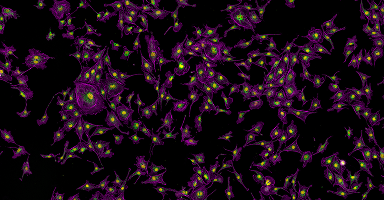
This NIH-funded project, titled “Expanding the Fluorescent Toolkit with Non-Canonical Amino Acids,” sought to leverage amino acids not found in nature to engineer fluorescent sensors of biological function. While fluorescent proteins revolutionized our ability to study biological systems, they are not easily tuned for multiple applications. Alternatively, non-natural amino acids with fluorescent side chains can be incorporated in protein backbones, where they can directly interact with biomolecules that alter their fluorescence properties. When combined with computational protein design methods, these fluorescent amino acids serve as starting points for the rapid development of novel protein-based fluorescent biosensors
Microbial biomanufacturing
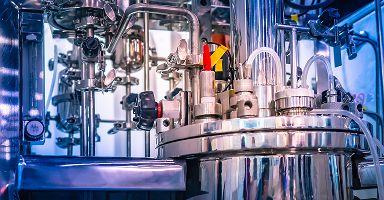
By leveraging “division of labor,” synthetic microbial communities represent composable biocatalyst platforms with the potential to overcome key bottlenecks that limit biochemical and bioenergy production. This NSF-funded project, titled “Elucidating, understanding, and leveraging ‘covert’ metabolic interactions in synthetic microbial communities,” seeks to develop new analytical and systems biology tools for understanding how different microbes metabolically interact within synthetic communities. These novel insights will ultimately inform novel “interactome” engineering strategies for enhancing community robustness and performance, thereby improving the production of key biomolecules of importance to the U.S. economy and national security.

Biorecovery of critical minerals
This NSF-funded project, titled “Biomolecular Engineering for Critical Mineral Recovery,” seeks to understand and to engineer biomaterials that bind critical minerals. Critical minerals are essential to the U.S. economy and national security, and this project makes use of advanced biomolecular and microbial engineering along with high-resolution structural biology methods to understand at a fundamental level how biological molecules can specifically bind to and process critical minerals. Using this new knowledge, our team will develop new materials and organisms that can separate, recover and recycle critical minerals from waste streams for efficient biorecovery.

Advanced wound dressings
This project, funded by the NIH, is titled “Inflammasome-modulating Polymeric Biomaterials to Augment Tissue Repair” and seeks to develop an advanced biopolymer wound dressing for controlled delivery of pro-healing biologics and bioactive agents. Traumatic wounds represent a major medical risk to warfighters and the general populace, and early, directed intervention can dramatically change the course of clinical management. Using the insights developed in this project to manufacture and characterize shelf- and temperature-stable wound dressings, our team is positioned to expand the acute clinical management toolkit for acute, infected and burn injuries.